Built around your specific habit pattern
Your session is generated from your own consultation. We ask what habit you're trying to build, what blocks it, what state you're in when it breaks. Built around your specifics.

Sleep hygiene is the set of behaviours that protect sleep onset and quality. It only sticks when the underlying autonomic state makes those behaviours feel obvious rather than imposed.
Sleep hygiene works — consistent bedtime, dim evening light, no screens before bed, cool room, no late caffeine. The evidence is clear. But the people who most need these habits are usually the people who can't make them stick. Willpower fails by 9pm. The phone wins. The bedtime slides. The pattern reasserts. The reason isn't laziness — it's that habits are downstream of state. A wired, activated body wants the phone, the snack, the stimulation. The behaviour is the symptom of the state.
The trap is more rules, more reminders, more apps. The work that lasts changes the underlying nervous-system state so the sleep-positive choices stop requiring willpower. They become what the body wants.
Bed at 10pm intended, scroll until midnight. The system needs the dopamine because it's still in on-mode.
Bedtime moves later by 15 minutes a night until it's 1am. No conscious decision, just state-driven drift.
The fridge run at 10pm. Often blood-sugar regulation downstream of stress, not hunger.
Five good nights, two ruined by weekend lie-ins. Circadian rhythm wrecked by Sunday night.
Alcohol used to bridge from activated to sleepy. Effective short term, costly for deep sleep.
Full sleep-hygiene knowledge, none of it applied. The signature gap between cognitive insight and embodied change.

Standard sleep advice is cognitive — here are the rules, follow them. It assumes the rational layer is in charge. But by 9pm the rational layer is tired and the unconscious wants what the state wants. Trying harder to follow the rules adds an exhausting layer of self-monitoring that itself disrupts sleep.
Hypnotherapy works directly on the unconscious patterns underneath behaviour. New associations are introduced — bedroom as cue for descent rather than scroll, evening as the body winding down rather than gearing up. With repetition the state shifts and the behaviour follows. The American Psychological Association recognises hypnotherapy as an evidence-based psychological approach.
Most sleep advice is a checklist. The session works on the underlying state from which sleep-positive habits become automatic rather than effortful.
Your session is generated from your own consultation. We ask what habit you're trying to build, what blocks it, what state you're in when it breaks. Built around your specifics.
The session works on the autonomic conditions that produce sleep-positive choices automatically. The behaviour follows.
Three short voice recordings during the consultation are analysed for emotional tone. Habit-disruption signature shows in voice; the session is calibrated accordingly.
Every Hypnotrack pathway is built on clinical frameworks from a qualified hypnotherapist — registered, National Hypnotherapy Society (HYP16-03742).
The Sleep & Recovery pathway is designed for the specific shapes habit difficulty takes. Some may sound familiar.
Phone-in-bed as default. The session works on the underlying need for stimulation that the phone meets.
No anchor in the evening. The session reinforces bedtime as a cue your body recognises and starts moving towards.
Five good nights, weekend resets. The session supports the consistency that makes the rhythm hold.
Alcohol bridging activation to sleep. The session offers an alternative descent route.
The 10pm fridge run. The session works on the activation that drives it.
Knowing every rule, applying none. The session moves the work to the layer where habits actually live.
Your session is around 15 minutes of personalised hypnotherapy audio. It opens with breath and grounding work — establishing the evening descent your habits need to anchor to.
It moves into recognition of your specific habit pattern. New patterns are introduced: bedroom as cue for descent, phone-down as the natural choice, the body recognising bedtime. Future-pacing — what evenings feel like when sleep-positive choices are what the body wants. Yours forever, designed as a pre-bed practice that builds the habits over time.
Built from your own consultation — your specific patterns, your own language, the version of you whose evenings settle without a fight.
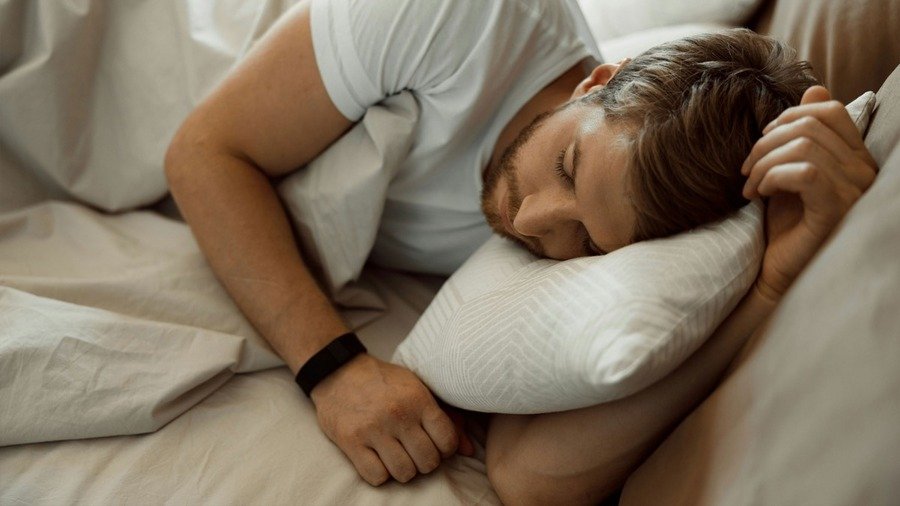
We won't promise habit change in a week. Sustainable habit formation works over 4–12 weeks of consistent practice. The session shifts the state from which habits form, but the daily practice still has to happen. Some habits — particularly substance ones — may need additional support.
If sleep disruption is severe, persistent, or accompanied by other symptoms, please see your GP. Hypnotherapy can support but is not a substitute for clinical care. NHS insomnia guidance.
Habit formation literature suggests 4–12 weeks for behaviour to become automatic. With state-level work the timeline often shortens because the behaviour stops requiring willpower.
Most people use it in the evening, an hour or two before bed. It anchors the wind-down. Some also listen at the moment of bedtime as a sleep onset support.
Failures are data, not character. The session works on the underlying state so the failures become less frequent. Most people see the slips drop steadily over weeks.
No — it makes them workable. The rules still apply. The session removes the willpower tax that makes them break.
If the underlying state is held, no. If old stress patterns re-activate the system, old habits can resurface. The session can be re-listened to whenever needed.
Around 15 minutes. Delivered within 30 minutes. Yours forever.
No specific belief is required. You remain in control throughout.