Built around your specific pattern
Your session is generated from your own consultation. We ask how long onset takes, what keeps you awake, what would change. Built around your specifics.

The harder you try to fall asleep, the more reliably you stay awake. Sleep isn't a thing you can do; it's the state that arrives when you stop performing wakefulness.
Sleep onset requires a measurable drop in cortical arousal — heart rate down, breath slower, attention narrowing inward. Trying to make this happen produces the opposite: the act of trying keeps the system vigilant. This is why most onset-insomnia advice fails. It treats sleep as a target.
The work that lasts reframes sleep as the withdrawal of wakefulness rather than the performance of unconsciousness. The session trains the body to let go reliably — breath softening, jaw releasing, attention turning in. Sleep then arrives as the absence of effort, not the result of it.
The harder you try, the more impossible. The classic onset-insomnia mechanism.
'It's 1:30am, if I sleep now I'll get 5 hours...' The math that guarantees more wakefulness.
Dreading bed because of last night. The pre-emptive activation that becomes self-fulfilling.
The mind that won't quieten. Pairs well with Quiet a Busy Mind at Night.
Tired but wired. The physiological activation that prevents descent regardless of mental fatigue.
The screen use that delays melatonin and keeps cortical arousal high. Even brief checking matters.

Sleep onset is parasympathetic — it happens when the body's safety system takes over. Conscious effort engages the sympathetic system, which is the opposite direction. This is why willpower fails; it's the wrong nervous-system branch.
Hypnotherapy works at exactly the parasympathetic level. Rather than instructing sleep, it offers the deeper mind the conditions for parasympathetic dominance — and sleep follows as the natural consequence. The American Psychological Association recognises hypnotherapy as an evidence-based psychological approach.
Most onset advice is more sleep hygiene. The session works on the underlying nervous-system descent.
Your session is generated from your own consultation. We ask how long onset takes, what keeps you awake, what would change. Built around your specifics.
The session works on the parasympathetic descent that allows sleep, not on willing sleep to happen.
Three short voice recordings during the consultation are analysed for emotional tone. Onset-anxiety signature shows in voice; the session is calibrated accordingly.
Every Hypnotrack pathway is built on clinical frameworks from a qualified hypnotherapist — registered, National Hypnotherapy Society (HYP16-03742).
The Sleep & Recovery pathway is designed for the specific shapes onset difficulty takes. Some may sound familiar.
When 30–60 minutes is normal for you, the session can compress this. Most people see meaningful change within weeks.
The anticipatory anxiety about not sleeping. The session works on the underlying loop.
Physiologically activated despite mental fatigue. Pairs with general nervous-system settling work.
The work-week-anticipation pattern. The session can be re-listened to on Sundays specifically.
The hour after scrolling when sleep won't come. Pairs with Reduce Screen Time.
After insomnia episodes or stressful periods. Rebuilding the body's expectation that sleep is available.
Your session is around 15 minutes of personalised hypnotherapy audio. It opens with breath and body-grounding work designed for descent rather than alertness.
It moves into recognition of your specific onset pattern. New patterns are introduced: the felt sense of letting-go, withdrawal of trying, parasympathetic descent. Future-pacing — what bedtime feels like with sleep arriving easily. Yours forever, designed for in-bed listening as a pre-sleep ritual.
Built from your own consultation — your specific onset, your own language, the version of you who stops trying and falls asleep.
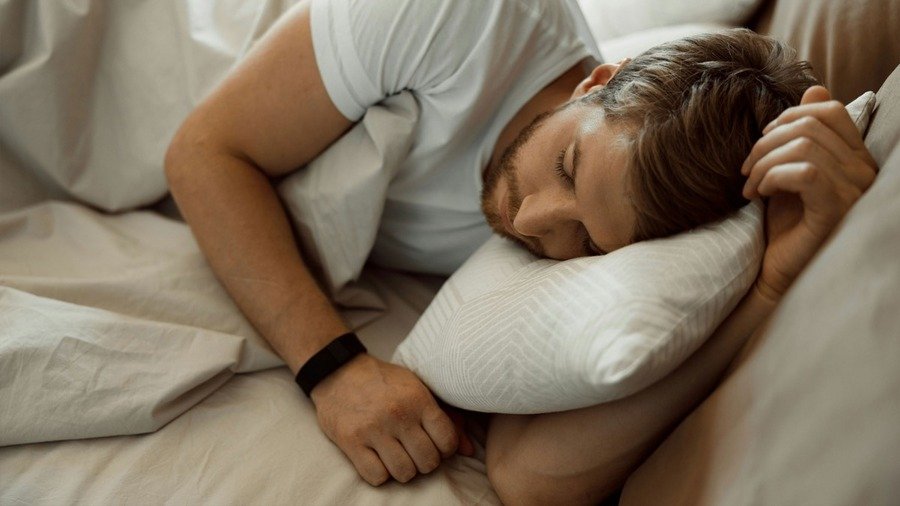
We won't promise instant onset. Sleep is biological and depends on many variables. The session improves the conditions; the actual sleep arrives in its own time.
If onset insomnia is severe and persistent (multiple weeks, affecting health/work), please see your GP. CBT-I is the first-line evidence-based treatment for chronic insomnia. NHS insomnia guidance.
10–20 minutes is normal. Under 5 minutes can indicate sleep debt; over 30 minutes consistently is delayed-onset territory.
Yes — designed for it. Many people fall asleep before the session finishes. That's fine; it's working.
Common in the first weeks. Let the session keep playing or stop it — your call. Either way, the parasympathetic state it built has happened.
It can sit alongside. Don't change medication without your GP. Many people use the session as part of a slow reduction supported by their prescriber.
Often within 1–2 weeks for the worst onset patterns. Some people see meaningful improvement after the first few listens.
Around 15 minutes. Delivered within 30 minutes. Yours forever.
No specific belief is required. You remain in control throughout.