Built around your specific solitude pattern
Your session is generated from your own consultation. Which solitudes destabilise you, when the climb begins, what the body does. Built around your specifics.

Fear of being alone is autonomic destabilisation in the absence of co-regulating relational presence. Unlike loneliness, which is a felt sense, this is a nervous-system event.
Fear of being alone is autonomic destabilisation in the absence of co-regulating presence. From early infancy, the nervous system learns to regulate partly through proximity to a calm other — co-regulation. When that early proximity is reliable, the system internalises the capacity to self-regulate; when it's inconsistent or absent, the capacity remains externally dependent. Adult monophobia is the residue: the body has not fully learned to settle without another body in the room. Attachment theory and polyvagal theory both describe this — solitude reads to the dysregulated system as social-engagement absence, which the ventral vagal system reads as threat.
Common causes: inconsistent early attachment, anxious or fearful-avoidant patterns, traumatic separations, parentification (where the child regulated others rather than being regulated), bereavement that removed a primary co-regulator. Willpower fails because the destabilisation is autonomic. Telling yourself you're fine alone arrives after the body has already destabilised. The work that lasts addresses internalisation of co-regulation.
One night, body unsettled. The presence-anchor removed, the system without its regulator.
7pm, no one home, walls closing in. The autonomic system reading absence as threat.
Entered to avoid the in-between. The choice driven by autonomic refusal of solitude.
The lost person was the regulator. The solitude is structurally different now.
Phone always live, audio always on, conversation always running. The substitute presence.
Cannot sleep without another body in the room or house. The nighttime presence requirement.

Standard advice — enjoy your own company, do hobbies, learn to be with yourself — fails because the destabilisation is autonomic and developmentally rooted. By the time the rational mind is offering the encouragement, the body has already begun to ungroun. Forcing extended solitude without state-work often produces clinical destabilisation rather than growth.
Hypnotherapy works at the autonomic and subconscious level, where co-regulation-internalisation actually develops. The session helps the deeper mind hold solitude with a settled rather than threat-primed baseline — building, gradually, the internalised regulator that early development left incomplete. The American Psychological Association recognises hypnotherapy as an evidence-based psychological approach.
Most fear-of-being-alone content is solo-activity suggestion. The session works on autonomic capacity for solitude itself.
Your session is generated from your own consultation. Which solitudes destabilise you, when the climb begins, what the body does. Built around your specifics.
The session works on the autonomic capacity to settle without external presence. Less amygdala spike at solitude, more available internal regulator.
Three short voice recordings during the consultation are analysed for emotional tone. Attachment-anxiety signature shows in voice; the session is calibrated accordingly.
Every Hypnotrack pathway is built on clinical frameworks from a qualified hypnotherapist — registered, National Hypnotherapy Society (HYP16-03742).
The Fears & Phobias pathway is designed for the specific shapes monophobia takes. Some may sound familiar.
One night, body destabilised. The session works on the internalised regulator that holds without the partner.
Walls closing in. The session settles the autonomic threat-reading of absence.
Driven by solitude-avoidance. The session restores capacity to remain in the in-between.
Lost co-regulator. The session supports the slow rebuild of internal regulation.
Phone, audio, conversation always running. The session reduces the underlying need for the substitute presence.
Nighttime presence required. The session works on the felt-safety baseline for solo sleep.
Your session is around 15 minutes of personalised hypnotherapy audio. It opens with breath and grounding — felt-safety anchoring in the body's own present regulation.
It moves into recognition of your specific solitude pattern. New patterns are introduced: the solitude held as settled rather than destabilising, the internal regulator available, the empty house tolerable. Future-pacing — the evening alone enjoyed, the night spent unaccompanied, the in-between held without rushing into the next relationship. Yours forever, designed for use during specific solo periods.
Built from your own consultation — your specific fear of being alone, your own language, the version of you whose body holds settled in solitude.
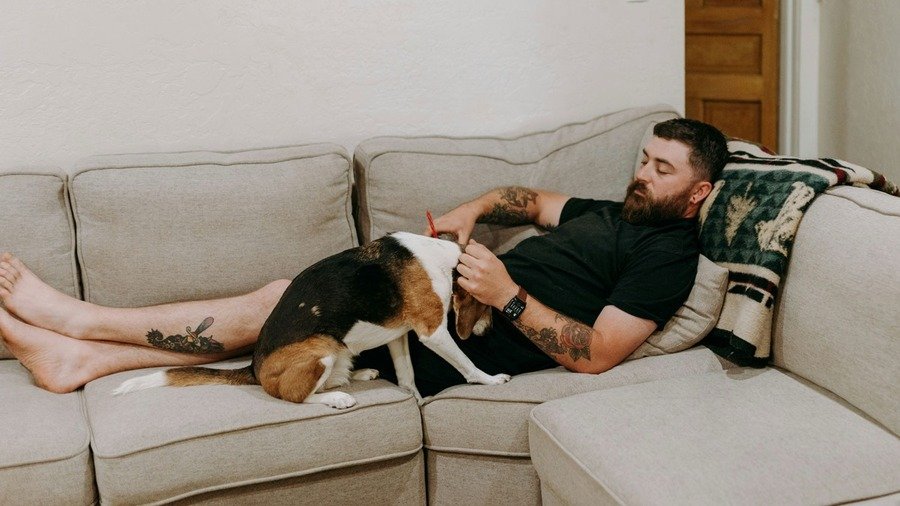
We won't promise that one listen builds an internalised regulator that early development didn't. Co-regulation internalisation usually takes time, often with attachment-focused therapy — schema therapy, AEDP, EFT, or attachment-informed psychotherapy — alongside. The session sits alongside, not instead.
If solitude is producing acute panic, dissociation, or self-harming impulses, please speak to your GP about specialist support. NHS phobias guidance.
Many people feel a softening of the acute climb within 1–2 weeks of consistent listening. The deeper internalisation of co-regulation takes longer and benefits from attachment-focused therapy alongside.
Before known solo periods (partner away, weekend alone). At the first sign of the climb. As a regular evening practice during sustained solo seasons. Don't use it to replace company entirely — use it to develop your own regulator.
Possibly, alongside grief support. The session works on the autonomic destabilisation; the grief itself usually needs companionship — counselling, a bereavement group, trusted people. The two work together.
Yes, on the autonomic side. The session reduces the solitude-fear that may be keeping you in the relationship. The relationship decision itself often needs separate space — a therapist, a trusted person.
Honestly — rarely entirely without longer attachment-focused work. The session reduces the autonomic destabilisation, restores capacity to be alone without acute distress, and supports the deeper relational therapy where it sits alongside.
Around 15 minutes. Delivered within 30 minutes. Yours forever.
No specific belief is required. You remain in control throughout.