Built around your specific activation
Your session is generated from your own consultation. We ask where activation lives in your body, what triggers it, what would change. Built around your specifics.

The relaxation response is a measurable parasympathetic shift — slowed heart rate, lowered blood pressure, deepened breath. It is a learnable skill, not a circumstance, and most adults have lost access to it.
Relaxation is not the absence of activity — it is a specific autonomic state. The parasympathetic branch of the nervous system slows the heart, deepens the breath, redirects blood to digestion, lowers cortisol, releases muscular bracing. In adults living with chronic demand, this branch atrophies from disuse. The sympathetic side dominates by default. Sit down to rest and the body keeps scanning, keeps clenching, keeps bracing. The capacity to drop has thinned.
Common causes: chronic stress, screen-saturated downtime, perfectionism, trauma residue, hyper-vigilant parenting or caregiving. The trap is consuming relaxation — booking spas, buying gadgets, putting on music — when the issue is internal. The work that lasts retrains the autonomic system itself.
Free time, no demands. Still scanning. The body too geared up to recognise rest is permitted.
Shoulders up, jaw tight, breath shallow — through what should be the recovery moment.
Meditation, yoga, breathwork — done as obligations, not access points. The system stays guarded.
The default substitute. Stimulation feels like rest because the autonomic state is unchanged.
Going from full-on to collapsed. No middle setting. The parasympathetic dial is missing.
Sitting still while feeling agitated. The body in chair but the system still racing.

Telling a chronically activated person to relax doesn't work — the instruction goes to the cognitive layer while the issue sits below it. Trying harder to relax adds another demand. The autonomic state has to be entered, not commanded. And entering requires a route the system can learn.
Hypnotherapy is a parasympathetic-dominant state by mechanism. Slowed breath, narrowed focus, dropped muscle tone — the same physiological signature as the relaxation response, accessed via guided suggestion rather than effort. With repetition the route widens and access becomes available outside the session. The American Psychological Association recognises hypnotherapy as an evidence-based psychological approach.
Most relaxation content is ambient — sounds, scenery, slow voices. Pleasant but generic. The session works on the specific autonomic patterns that block your descent.
Your session is generated from your own consultation. We ask where activation lives in your body, what triggers it, what would change. Built around your specifics.
The session uses repeated descent into parasympathetic state. Like a strength practice — reps build the capacity over time.
Three short voice recordings during the consultation are analysed for emotional tone. Chronic-activation signature shows in voice; the session is calibrated accordingly.
Every Hypnotrack pathway is built on clinical frameworks from a qualified hypnotherapist — registered, National Hypnotherapy Society (HYP16-03742).
The Sleep & Recovery pathway is designed for the specific shapes relaxation difficulty takes. Some may sound familiar.
The body always one notch above rest. The session works on lowering the baseline, not just the peaks.
The chronic-bracing signature. The session targets the autonomic instruction underneath the muscle.
Restlessness inside rest. The session offers the body something to do — a state to enter — rather than nothing.
Going from on to off-switched. The session restores the middle range parasympathetic regulation provides.
Free time feels uneasy. The session works on the safety underneath the freedom.
Doing rest correctly. The session removes the achievement layer and lets the state actually arrive.
Your session is around 15 minutes of personalised hypnotherapy audio. It opens with slow breath and full-body progressive grounding — the foundation of parasympathetic access.
It moves into recognition of where activation holds in your specific body. New patterns are introduced: the felt sense of dropping, of permission, of the system softening. Future-pacing — what daily life feels like when relaxation is a state you can enter on demand. Yours forever, designed for daily practice anywhere quiet.
Built from your own consultation — your specific activation, your own language, the version of you who can actually drop.
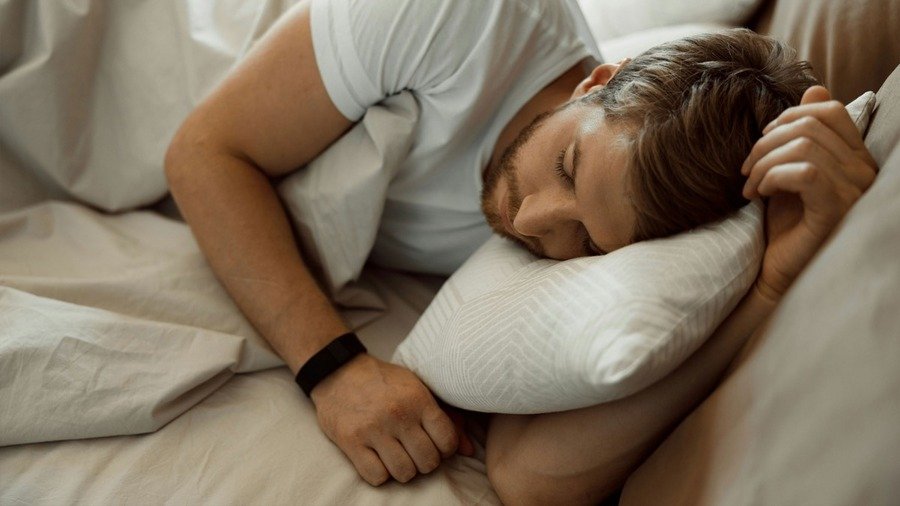
We won't promise instant calm. The relaxation response is a learnable skill that strengthens with reps. Most people notice a meaningful shift within 1–3 weeks of consistent practice. Faster if the activation pattern is recent; slower if it has been the default for decades.
If the inability to relax sits inside a wider anxiety pattern with panic, intrusive thoughts, or somatic symptoms, please speak to your GP. Hypnotherapy can support but is not a substitute for clinical care. NHS anxiety guidance.
Most people feel a shift within the first listen — slower breath, softer body. The lasting change in baseline activation usually settles in over 1–3 weeks of daily practice.
Yes — short, quiet, ideally with headphones. Many people use the session at lunchtime as a reset, then again before bed for sleep onset.
Common and expected at first. The session is designed to meet you in activation and gently lower the baseline. Lying down often works better than sitting up.
No. The session supports the underlying autonomic state but is not a medical substitute. If you are on anxiolytic medication, coordinate any changes with your GP.
With reps, yes. The autonomic system learns the route. People find the felt sense of relaxation becomes accessible outside the listen, gradually, with practice.
Around 15 minutes. Delivered within 30 minutes. Yours forever.
No specific belief is required. You remain in control throughout.